

Training zones are a useful tool for prescribing training and intensity. When coaches build workouts and plans, training zones make prescription and analysis of training simple and effective. However, many athletes are unsure of what each training zone means, how it should feel, and what it's trying to achieve. Will and Matt talk through the science behind zone training, what each zone represents physiologically and their purposes within a training plan.
Also in the show, Will talks through his new addiction to Zwift and Matt admits to being a superficial strava rider.
Visit our new website on PerformanceAdvantagePodcast.com for a 30% off early bird discount on our newest courses: Running with a Power Meter and Mountain Biking with a Power Meter. https://www.performanceadvantagepodcast.com/
------
Get the whole MASTERCLASS to learn how to use sports science! Using Sports Science to Train More Effectively: https://link.performanceadvantagepodcast.com/course
Get the most out of your power meter in 3 simple modules: https://link.performanceadvantagepodcast.com/course
PA Podcast YouTube: https://link.performanceadvantagepodcast.com/youtube
Follow Dr Matt on Instagram: https://link.mtbphd.com/instagram
Follow Dr Will on Instagram: https://link.drwillo.com/instagram
Dr Will's YouTube channel: https://link.drwillo.com/youtube
Dr Matt's YouTube: https://link.mtbphd.com/youtube
Listen to the podcast: http://bit.ly/2ZzgiDV
Getting coaching with Dr Will: http://bit.ly/31Ei5s2
Getting coaching with Dr Matt: https://link.mtbphd.com/home
53 | Training Zones: Science, Simplicity, and Effectiveness
From the Performance Advantage blog · Performance Advantage · 2020-10-14
Episode 53 of the Performance Advantage Podcast talks about training zones; Dr. Will, and Dr. Matt, teach you how to calculate your training zones as well as breaking down the science of each of the five fundamental zones.
In addition to the five fundamental training zones, there are zones six & seven which are neuromuscular a are more for post-workout analysis rather than workout prescription:
Zone 1: Active Recovery
Zone 2: Maximal Aerobic Function
Zone 3: The Grey Zone
Zone 4: Lactate Threshold
Zone 5: VO2 Max
Zone 6: Anaerobic Capacity
Zone 7: Neuromuscular Power
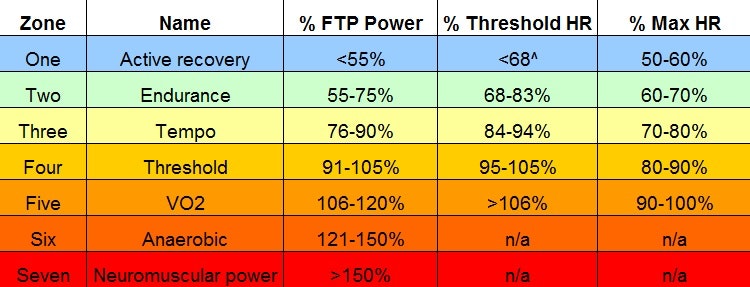 Training zones
For a weekend warrior, one who mostly exercises one or two times a week, the specific data on this chart would not be something that you would want to focus on.
As what Dr. Matt said in the podcast:
"It's really easy to see that it gets murky really, really quickly. So zones are a really good way to prescribe exercise because you know what to do, and over time you learn how it feels. And it's super simple for an athlete and a coach to communicate, and to analyze information when we know these discrete zones. But I don't think we need to think about them so specifically and put so much importance on these super, super specific numbers. They are a zone and this is, as we talked about, this is how energy systems work. They're on a kind of this continuum, and they don't start and stop at 56%, your lactate threshold. So this is for any sport."
The important thing to remember with training zones is how your body's energy system function for each level of the zone. You should also take into consideration the purpose of your exercise, or exercise training when you use the training zones as a reference point.
In zone one (1), we were relying on our oxidative metabolism which means that we used fat as a source of fuel in this stage. If we compare it to zone five (5), where glucose is our main source of fuel, we can see the two complete opposite ends of a continuous spectrum.
However, if you wanted to still use fat as a fuel source, and expend more energy while doing it, then zone two (2) would be your standard training zone because zone two enabled you to generate higher output of energy. It also represents "the highest rate of work where we're relying predominantly on oxidative metabolism."