Podcast archive
67 | Fatigue Scientist Dr Guillaume Millet on What Slows You Down
2020-10-20
 Fatigue is one of the most common and distressing symptoms experienced by athletes and patients.
Dr Guillaume Millet, French native and lifelong ultra-athlete and fatigue researcher, studies extreme sports (ultra-endurance or hypoxia) as a model to explore the limits of human adaptive responses.
Gui, as he is commonly known, has developed the flush model. The flush model has the following four components: (i) the ball-cock (or buoy), which can be compared with the rate of perceived exertion, and can increase or decrease based on (ii) the filling rate and (iii) the water evacuated through the waste pipe, and (iv) a security reserve that allows the subject to prevent physiological damage.
We delve into the science of fatigue and how Gui's flush model can help us become better racers.
Gui's website www.kinesiologui.com, Twitter and Flush Model Research Article
Visit our new website on PerformanceAdvantagePodcast.com for a 50% off early bird discount on our newest courses: Running with a Power Meter and Mountain Biking with a Power Meter
------
MASTERCLASS: Using Sports Science to Train More Effectively: https://www.performanceadvantagepodcast.com/
Follow Dr Matt on Instagram http://bit.ly/2GqPs9s
Follow Dr Will on Instagram https://link.drwillo.com/instagram
Dr Will's YouTube channel https://link.drwillo.com/youtube
Listen to the podcast: http://bit.ly/2ZzgiDV
Sign-up for the Endurance Training Hub http://bit.ly/2UJeqXf
Getting coaching with Dr Will http://bit.ly/31Ei5s2
Get FREE MTB Training Plans https://smartmtbtraining.com/mtb-training
Getting coaching with Dr Matt https://mtbphd.com/
Fatigue is one of the most common and distressing symptoms experienced by athletes and patients.
Dr Guillaume Millet, French native and lifelong ultra-athlete and fatigue researcher, studies extreme sports (ultra-endurance or hypoxia) as a model to explore the limits of human adaptive responses.
Gui, as he is commonly known, has developed the flush model. The flush model has the following four components: (i) the ball-cock (or buoy), which can be compared with the rate of perceived exertion, and can increase or decrease based on (ii) the filling rate and (iii) the water evacuated through the waste pipe, and (iv) a security reserve that allows the subject to prevent physiological damage.
We delve into the science of fatigue and how Gui's flush model can help us become better racers.
Gui's website www.kinesiologui.com, Twitter and Flush Model Research Article
Visit our new website on PerformanceAdvantagePodcast.com for a 50% off early bird discount on our newest courses: Running with a Power Meter and Mountain Biking with a Power Meter
------
MASTERCLASS: Using Sports Science to Train More Effectively: https://www.performanceadvantagepodcast.com/
Follow Dr Matt on Instagram http://bit.ly/2GqPs9s
Follow Dr Will on Instagram https://link.drwillo.com/instagram
Dr Will's YouTube channel https://link.drwillo.com/youtube
Listen to the podcast: http://bit.ly/2ZzgiDV
Sign-up for the Endurance Training Hub http://bit.ly/2UJeqXf
Getting coaching with Dr Will http://bit.ly/31Ei5s2
Get FREE MTB Training Plans https://smartmtbtraining.com/mtb-training
Getting coaching with Dr Matt https://mtbphd.com/
Why You Slow down. Flush Model of Fatigue with Dr Guillaume Millet
From the Performance Advantage blog · Dr Will O'Connor · 2020-12-02
What is Fatigue?
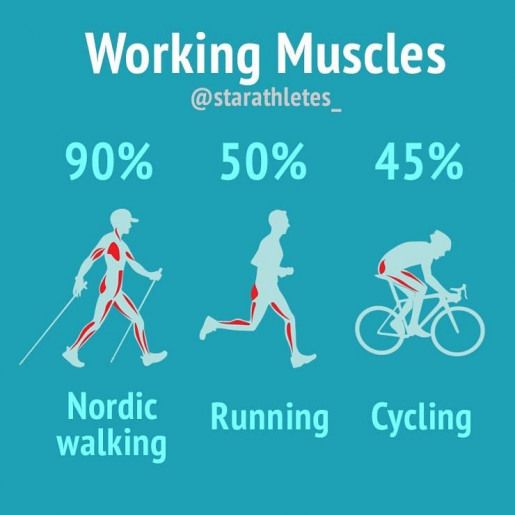
Fatigue resistance is the critical component of endurance exercise. Fatigue can be defined as strength loss (i.e. a decrease in maximal voluntary contraction ), which is known to be dependent on the type of exercise you are doing. Important variables include the intensity and duration of the activity, as well as the muscle groups involved and the type of muscle contraction (Figure 1.)
Measuring Fatigue
Traditionally, to measure the level of muscular fatigue a test of maximal voluntary contraction (MVCs) and maximal electrical/magnetic stimulations is used. These tests provide an insight into whether “the brain” (central nervous system) is failing to contract the muscle, or if the muscle itself (peripheral) is fatigued and unable to produce force.
However, such measurements do not necessarily predict how muscle function may influence ultra-endurance running because the muscle is always able to produce MVCs at forces that far exceed the forces require to run.
In other words, the nature of the relationship between fatigue as measured using maximal contractions/stimulation and submaximal performance limitation/regulation is questionable.