I recently hit 35, and for the first time, I felt the weight of aging. Don't get me wrong, I've never been one to dread getting older. But then, bam! An injury hit me out of nowhere. Just weeks ago, I was crushing miles with my mate Michael, a 26-year-old beast who's off to the half marathon world championships. Now, I'm hobbling like I've got one foot in the grave. WTF?
The Reality Check
I wasn't doing anything wild in my training—just the usual grind. I was even clocking in a solid 8 hours of sleep and eating well. So, is this it? Is 35 the age when my body starts to crumble? I refuse to believe that. It's not just about age; it's about cumulative load and other variables. You know the saying, "It's the straw that breaks the camel's back"? Well, it's the weeks of consistent running that set the stage for injury, not just one bad day or getting a year older.
The Science of Aging in Endurance Sports
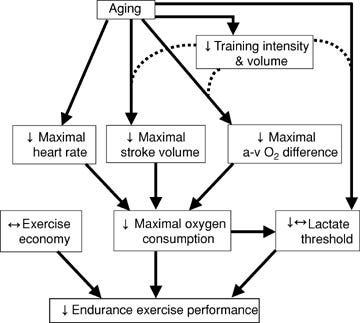
Let's geek out for a moment. A study by Tanaka and Seals 2008 found that as we age, there's a decline in the "exercise training stimulus," meaning both the intensity and volume of training tend to decrease (Figure 1). This isn't because our muscles and cardiovascular system are inherently aging but because we're not pushing as hard as we used to. So, the good news? Most of you still have untapped training potential. Because many of you started training later in life, you can still ramp up your training volume and intensity. 🤑
(Quick note. Tanaka et al. also found that max heart rate declined in endurance-trained runners was 5.6 bpm per decade (e.g. 190 bpm at 40 y/o would be 184.4 bpm at 50 y/o). This is why 220 minus your age for max heart rate doesn’t make sense.)
The Importance of Self-Care
Here's my big revelation: I need to start taking better care of myself. Longevity in running isn't about some magic bullet; it's about consistent self-care. Forget the gimmicks like Keto Cake or cold showers. If you want to perform well into your golden years, you've got to treat yourself like a pro athlete. And no, quitting your job and neglecting your family isn't the answer (tempting, but no). The key is balancing knowing when to step back and planning on when to go all in.
My Game Plan
So, what's my strategy for maintaining high training volume and intensity into my 40s? I'm still in the planning phase but thinking of a more holistic approach. Think cycling, mountain biking, swimming, and functional strength training to build aerobic capacity. I'll plan short blocks of high-volume running rather than consistently building loads. Stay tuned for updates!
Injury Update
A quick note on my injury: X-rays and ultrasounds came back clean, which is typical for stress fractures and shin splints. These imaging techniques aren't sensitive enough for early-stage issues. An MRI is next on my list, but I'll already be healing by the time I get an appointment. For now, it's rest and recovery.
So, who's up for a "pro athlete week training camp" in 2024? Imagine the dream setup: train, eat, massage, sleep, repeat. Drop a 'keen' in the comments if you're interested! I’ll try to sort something out. This place in Thailand looks SICK! (If it’s “work,” Emma’s more likely to let me go!)
Catch you later, and remember, age is just a number, but science doesn't lie. ✌️
Week Thirteen - Strava Link
📊4:47 hrs total (TSS 199)
🏃2x Run = 44 min (6km)
🚵1x MTB = 1:10 hr (15km)
🚲1x Road Ride = 2 hrs (56km)
Mon - MTB with Dr Matt
Thurs - Sulking
Fri - Sulking
Sat - Sulking
Sun - 2 hr road ride
Recent Content
I’ve made a couple of YouTube shorts on how to make structured workouts on your Garmin or Coros device.