
I never thought I would feel slow after running a 35-minute 10km on a tough grass cross-country course, but that was the case last weekend. I finished 28th overall, 4 minutes and 30 seconds behind the winner, Cam Avery, and I felt like I was out of the main pack of runners. However, upon reflection, I achieved what I planned - pacing well and performing at a similar or slightly better level than I did at the North Island Champs a month ago, which was a 9km race.
Did I pace well? On paper, it may not look great, with a 3:22 first km (5:25min/mi) and a 3:38 (5:51min/mi) last km, but I ran the first km of the last loop in 3:28 (5:35min/mi), which is comparable to the first km. So, upon post-analysis, I realized that I went out a bit too fast, but at the time and before the race, I thought I could maintain a low 3:20min/km (5:22min/mi) average pace.
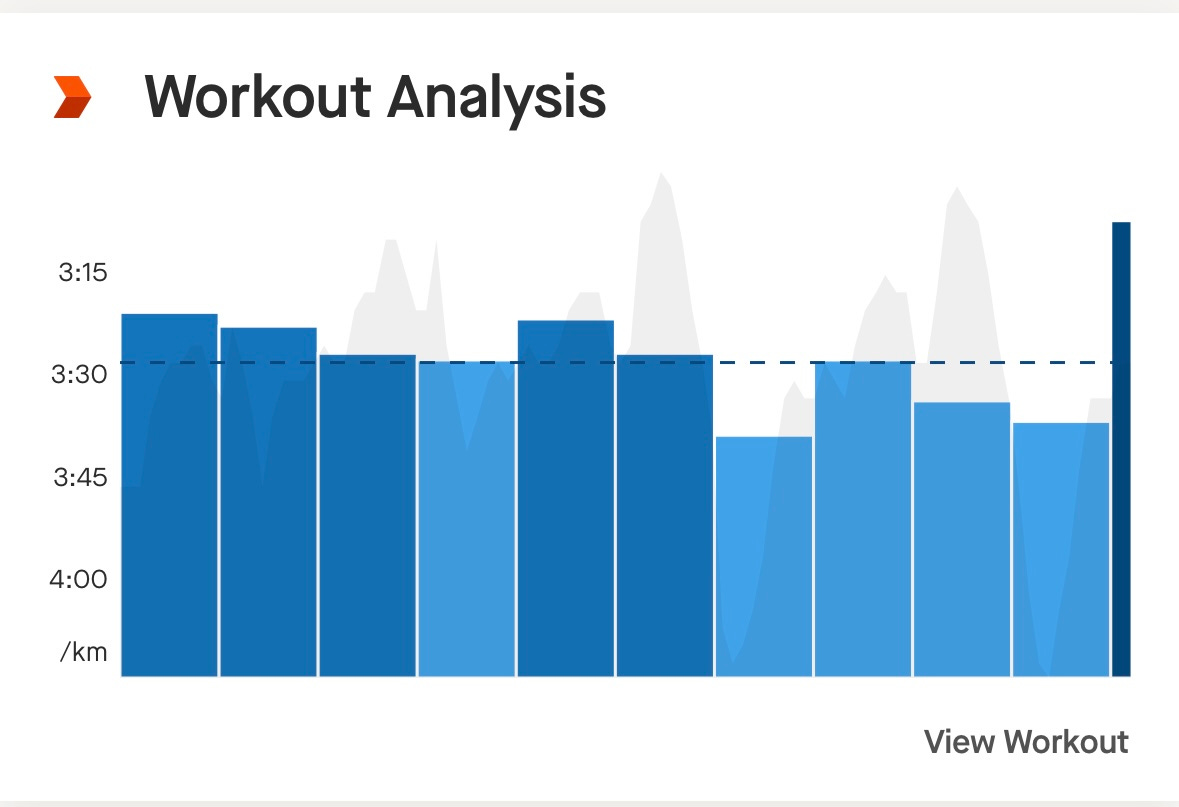
I've had some bad races in my time, and as I've matured, I've realized that having a good run where I can perform to my abilities is a massive win. When I don't experience injury, sickness, or feel super flat due to overtraining, it's a great feeling. I'm stoked to be eight weeks deep into a solid training block and able to perform as expected.
The Science of Being a Bit Soft 😶🌫️
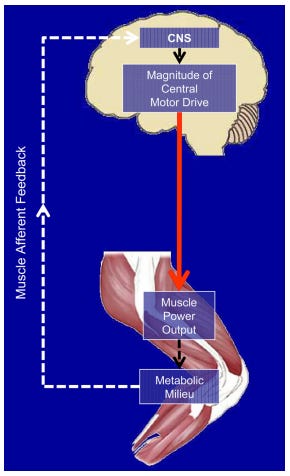
I definitely noticed a lack of hard training during the race. As I was fading over the last 10 minutes of the race, I noticed how uncomfortable I felt in the hurt box. There are a couple of reasons for this - I haven't done any hard training where I push myself to my limits. I've only done a few hard intervals with long recoveries to prime my body for some fast running without pushing my system too hard before it was ready. Without intervals with short recoveries, like 3-minute reps with 1-minute recovery, I haven't had to deal with or adapt to high anaerobic loads, which generate acidosis. This acidosis is associated with increases in ventilation, which is required to breathe out the CO2 generated from bicarbonate buffering the acidosis in the blood. These processes generate afferent feedbacks to the central nervous system, which are typically interpreted as discomfort, causing one to slow down and protect themselves from damage. However, in athletics, we need to override these signals as much as possible to push ourselves to our limits. Hard training, along with improving physiological coping mechanisms, also improves our capacity to tolerate discomfort.
As I've mentioned multiple times in this blog series, having a long-term goal and a training plan is powerful. While I may be a little slower than I’d like, I am still content with my performance as it aligns with my long-term goal of running fast in February and March.
Pro YouTuber 🤑
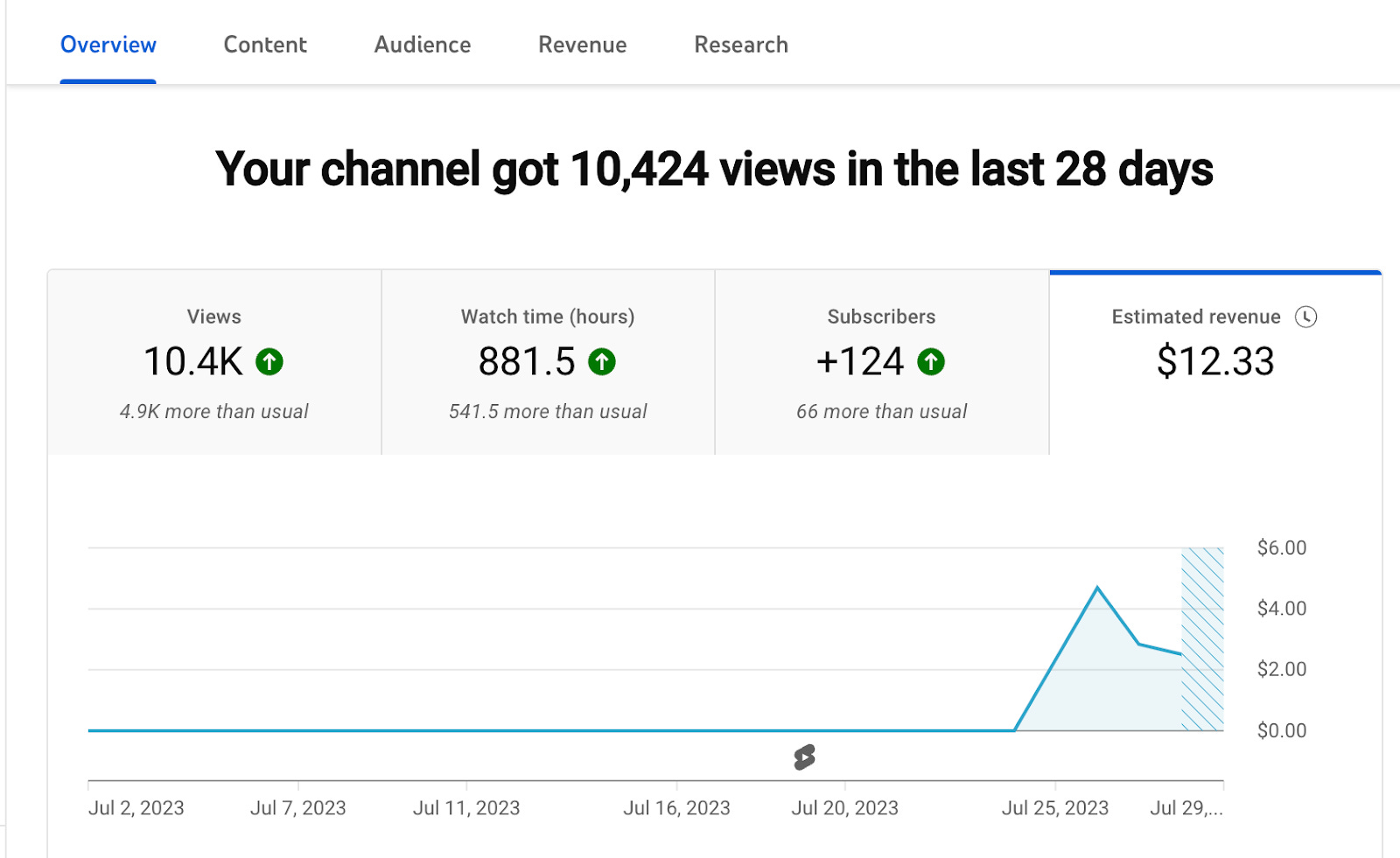
My career path has changed dramatically in the last week. Not really, but I'm thrilled to have met the requirements to get monetized on YouTube. I was going to give up on YouTube this year because I felt like I wasn't getting anything out of the time and effort compared to podcasting. However, I had a couple of videos do well, and since then, I've received many coaching leads from YouTube. I'm going to need to review my time and energy investments in the second half of this year. I'm not planning on becoming a YouTuber, but it's so much easier to connect with a wide audience than podcasting, which is highly competitive. Please check out my channel and click on some video ads! - YOUTUBE LINK
Week Eight - Strava Link
📊9.5 hrs total (TSS 604)
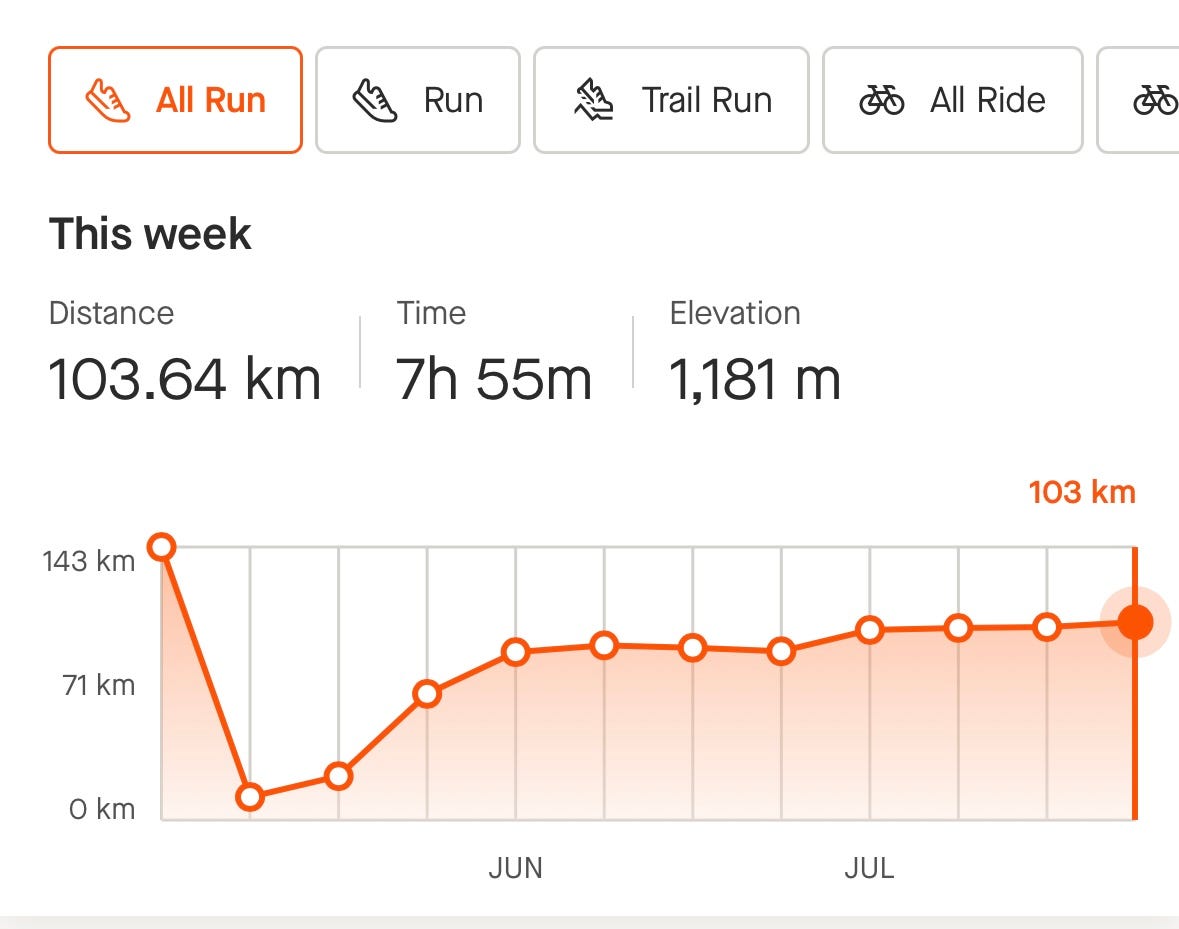
🏃7x Run = 8hrs (104km), 1181m 📈
🚵1x MTB = 1:32hr (25km)
Mon - Easy 30min (6km)
Tues - Aerobic 75min (18km)
Thurs - Easy Hour (off-road) - 13km
Fri - Easy trail 10km - 50min
Sat - WU - 10km XC (35:24 - 28th) - CD (18km)